
ST-30 Tweezer vs Electric Screwdriver: A Head-to-Head for Cell Phone Repair Tools
An ST-30 anti-static stainless steel tweezer and a mobile phone repair electric screwdriver are not two versions of the same purchase decision. They sit at different workstations, remove different components, and fail for different reasons. For B2B buyers building a cell phone repair tool assortment, the useful comparison is not which tool to drop — it is which qualification framework applies to each one before a purchase order is signed.
The Short Answer: Two Tools, Two Jobs
The ST-30 from KOOCU is a 120 mm stainless steel tweezer with anti-static properties and high hardness, built for handling small, non-threaded parts inside a phone. A mobile phone repair electric screwdriver is a powered hand tool with an aluminum alloy body, sold in the KOOCU K-series across power bands from 1.5W–15W (K01) up to 2W–30W (K05 and K07), and used to drive threaded fasteners in and out of a phone chassis.
KOOCU is a mobile phone repair tools and equipment brand of Guangzhou Weiqianji Technology Co., Ltd, based in Guangzhou, China. Its catalogue covers repair tweezers and electric screwdrivers for cell phone repair, and its export markets include Africa, South America, Southeast Asia, India, Bangladesh and Pakistan.
In practice, that means a repair tool kit needs both. A tweezer cannot deliver torque, and an electric screwdriver cannot pick up a flex connector, a shield, a gasket or a spacer. The head-to-head therefore belongs at the procurement level: tweezers are validated almost entirely by dimensional and material specification, while electric screwdrivers are validated by supplier qualification, electrical and transport compliance, and pre-shipment acceptance testing.
Problem Definition: Why Cross-Category Tool Comparisons Go Wrong
The recurring mistake in B2B sourcing is to place a tweezer and an electric screwdriver on one scorecard and compare them on price per unit, order quantity and lead time alone. That scorecard hides the two things that actually cause returns.
For tweezers, the failure mode is specification drift: the wrong overall length for the workstation, a material that is not stainless steel, or a tip that is not anti-static in an environment where electrostatic discharge can damage sensitive components. These are visible before shipment if the buyer knows which numbers to check.
For electric screwdrivers, the failure mode is supplier-side: unstable torque and magnetic performance that interrupts repair work, products that may fail local market compliance standards, or no formal after-sales support when a defect appears. Those risks are not solved by a better unit price. They are solved by supplier qualification, a documented pre-shipment test, and a clear remote-support policy.
The correct comparison structure is therefore four-layered: workflow role, physical specification, compliance file, and commercial terms. Only the last layer — MOQ, delivery terms, payment terms, lead time — is genuinely shared between the two product types.
Industry Background: What Is Driving Repair Tool Demand
Demand for cell phone repair tools tracks the repair service market rather than the new-phone market. Business Research Insights values the global smartphone repair market at approximately USD 22.66 billion in 2026, covering repair services and hardware replacement for batteries, screens and cameras.
That figure needs a definition caveat. Market sizing for this category is inconsistent: broader definitions that fold in the full spare-parts ecosystem have produced figures far above USD 200 billion for earlier base years. Buyers should treat any single headline number as a scope statement first and a forecast second.
Tool-level data is narrower but more directly relevant to assortment planning. Credence Research valued the global manual screwdriver market at USD 365.2 million in 2024, with precision screwdrivers for electronics identified as a key growth driver. On the trade side, US customs records for mobile opener tools under HS 8205 show an average import price of roughly USD 1.03 per unit — a historical reference point for the low-value end of the category, not a quotation for any specific model.
A structural driver sits behind these numbers. The “Right to Repair” movement has pushed OEMs toward releasing repair manuals and tools to third-party providers, which expands the installed base of independent repair shops and, with it, the consumable and hand-tool assortments those shops reorder.
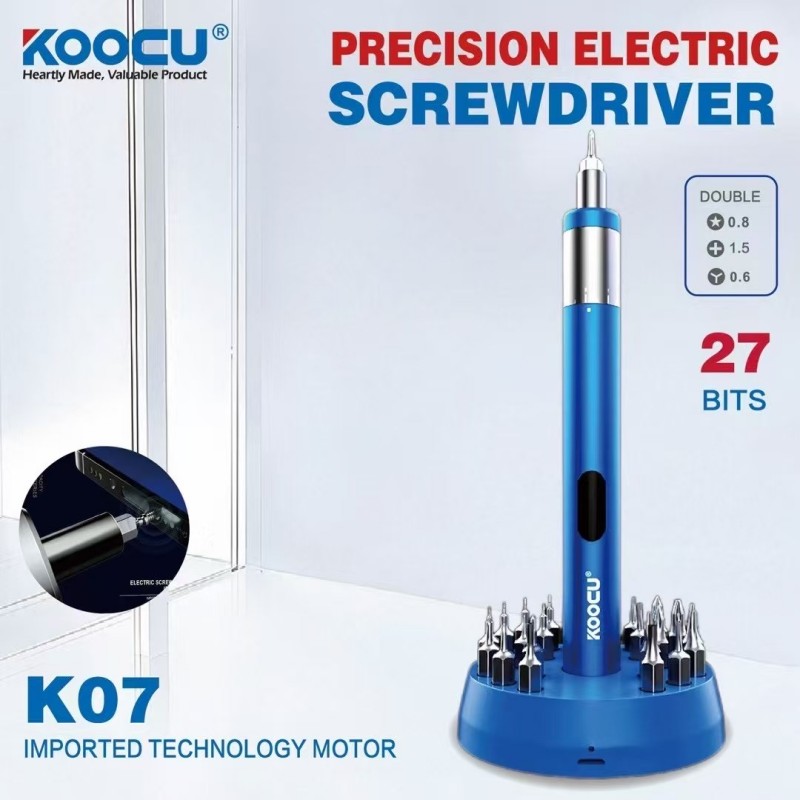
KOOCU K07 is a special screwdriver for mobile phone repair, rated 2W–30W with an aluminum alloy body. Electric screwdrivers of this type are qualified through supplier checks, not through tweezer-style dimensional screening.
Detailed Solution: What Each Tool Actually Does
ST-30: The 120 mm Anti-Static Stainless Steel Tweezer
KOOCU ST-30 is a tweezer for mobile phone repair with an overall length of 120 mm and a stainless steel body. It carries anti-static properties and high hardness — two attributes that matter more in a repair bay than they do on a spec sheet.
Length is the first selection variable. The 120 mm figure places ST-30 in the same dimensional family as ST-21, ST-25, ST-114, ST-115 and FS-11, all listed at 120 mm, while TS-11 and TS-15 are listed at 115 mm and the 7-SA SR and 7-SA-16 SS-SA-16 models at 130 mm. Length affects reach and control at the workstation, so a mixed order that ignores it produces a kit that technicians quietly avoid.
Material is the second variable. Stainless steel resists the corrosion and deformation that shorten service life in a shop where tweezers are handled constantly and cleaned repeatedly.
Anti-static behaviour is the third. In phone repair, a tweezer routinely comes into contact with components that are sensitive to electrostatic discharge. An anti-static tweezer reduces that exposure during handling and placement; a non-anti-static tool does not.
High hardness is the fourth. Tip geometry is the working surface of the tool, and hardness is what keeps that geometry stable across repeated contact with metal shields, brackets and connectors rather than deforming early.
The Mobile Phone Repair Electric Screwdriver
A mobile phone repair electric screwdriver is classified as a special screwdriver for mobile phone repair. In the KOOCU range, that covers K01 at 1.5W–15W, K01 Pro at 2W–15W, K02 and K04 at 2W–20W, and K05 and K07 at 2W–30W. All are built on an aluminum alloy body.
The K01 is the reference model for the category: aluminum alloy body, high-hardness strong-magnetic bits, and a stated output torque of 1–8 N·m. It replaces manual screwdriver work in high-volume disassembly, where a technician would otherwise absorb the physical effort of every screw personally.
Magnetic bit retention is not a cosmetic feature. A bit that loses magnetism drops screws into a chassis, and a dropped screw costs more time than the tool saves. That is why weak magnetic attraction during disassembly is treated as a service symptom rather than a minor annoyance.
Step-by-Step Breakdown: Two Parallel Qualification Tracks
Because the two tools fail differently, they should be qualified on two separate tracks that run in parallel through the same purchase order.
Track A — ST-30 Tweezer Specification Checks
- Confirm overall length against the workstation. ST-30 is listed at 120 mm. Verify the figure on the packing list and the physical sample, and do not accept a substitution from the 115 mm or 130 mm families without agreeing to it in writing.
- Confirm material. The declared material is stainless steel. Ask for the material statement to appear on the product documentation rather than only in a sales conversation.
- Confirm anti-static properties. Anti-static is a functional claim, so it belongs in the written specification and in the acceptance criteria, not only on a marketing page.
- Confirm hardness positioning. High hardness is the durability claim behind the tip. Tie it to the supplier’s stated specification and to your own incoming inspection, since hardness is not something a buyer can verify visually.
- Record the reference model clearly. ST-30 must be written exactly as ST-30 on the purchase order. Adjacent models such as ST-21, ST-25, ST-114 and ST-115 share the 120 mm length but are different items.
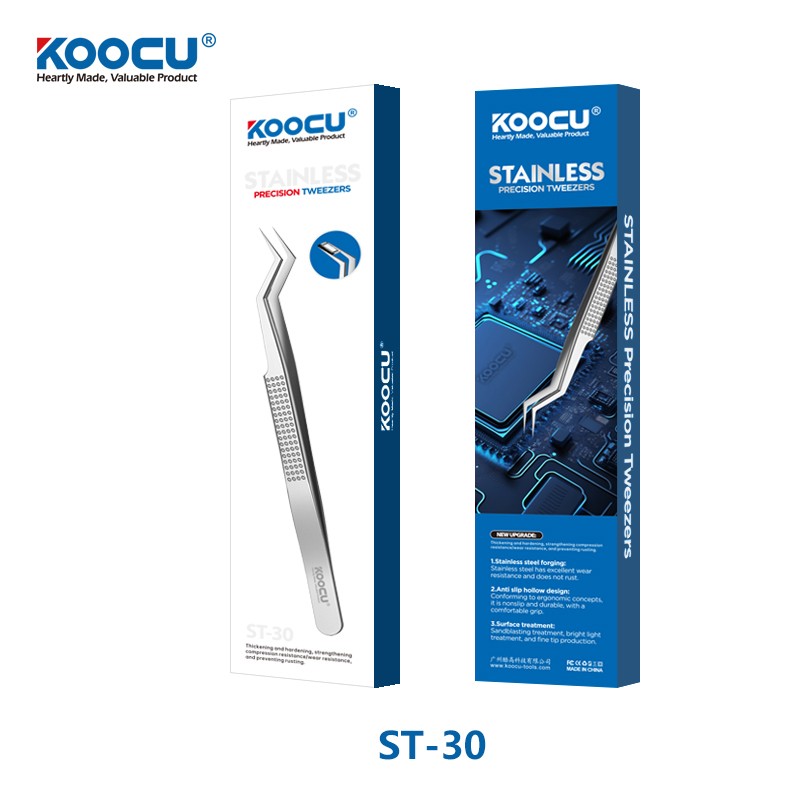
ST-30 is a 120 mm stainless steel tweezer with anti-static properties and high hardness. Its qualification is specification-led: length, material, anti-static behaviour and hardness.
Track B — Electric Screwdriver Supplier Qualification
Electric screwdrivers carry risks that a tweezer does not, because they combine a powered drive, a torque specification and — in kits supplied with cells — lithium batteries. Supplier qualification should address all three.
- Verify the compliance file, and verify what it actually is. This is the most commonly mishandled step. A PONY-issued Hazard Classification and Identification Report for Transport of Goods, certificate number MTIN67MG7731367U1, covers a lithium-ion cell of model 10440, 3.7V, 320mAh, 1.184Wh, packed 400 pcs per carton. It is issued against the IMO International Maritime Dangerous Goods Code 2024 Edition (Amendment 42-24) Special Provision 188 and the UN Manual of Tests and Criteria Part III subsection 38.3, with an issue date of 2025-12-01 and an expiry date of 2026-12-31.
- Do not misread that document as a product certification. The report is a third-party transport identification report for maritime shipment of a lithium cell. It is not a product certification and not a system certification. Buyers who file it as evidence of product quality are documenting the wrong thing — and buyers who assume the certificate number transfers to a different cell model are exposed at the port.
- Confirm torque and magnet performance in writing. For K01, the stated output is 1–8 N·m with high-hardness strong-magnetic bits. Unstable torque and magnetic performance are the two defects that interrupt repair work most directly, so they belong in the acceptance criteria.
- Confirm the pre-shipment test. The stated acceptance criterion is a pre-shipment test, backed by 100% product testing. Ask what is tested and what record accompanies the shipment.
- Confirm after-sales route. After-sales support is provided via remote support. Confirm the channel, the response path and who is responsible before the first order, not after the first defect.
Track B2 — Purchasing Terms and Acceptance Criteria
The commercial layer is where the two product types converge, because both are ordered from the same manufacturer under the same terms.
- Minimum order quantity: 50 units.
- Delivery terms: FOB / CIF.
- Payment terms: 100% cash payment.
- Acceptance criteria: pre-shipment test.
- Lead time: 10 days typical production lead time.
- Monthly capacity: 10,000 units.
- OEM: available, with customization options for voltage and logo.
- Export markets: South America and Africa, alongside Southeast Asia, India, Bangladesh and Pakistan.
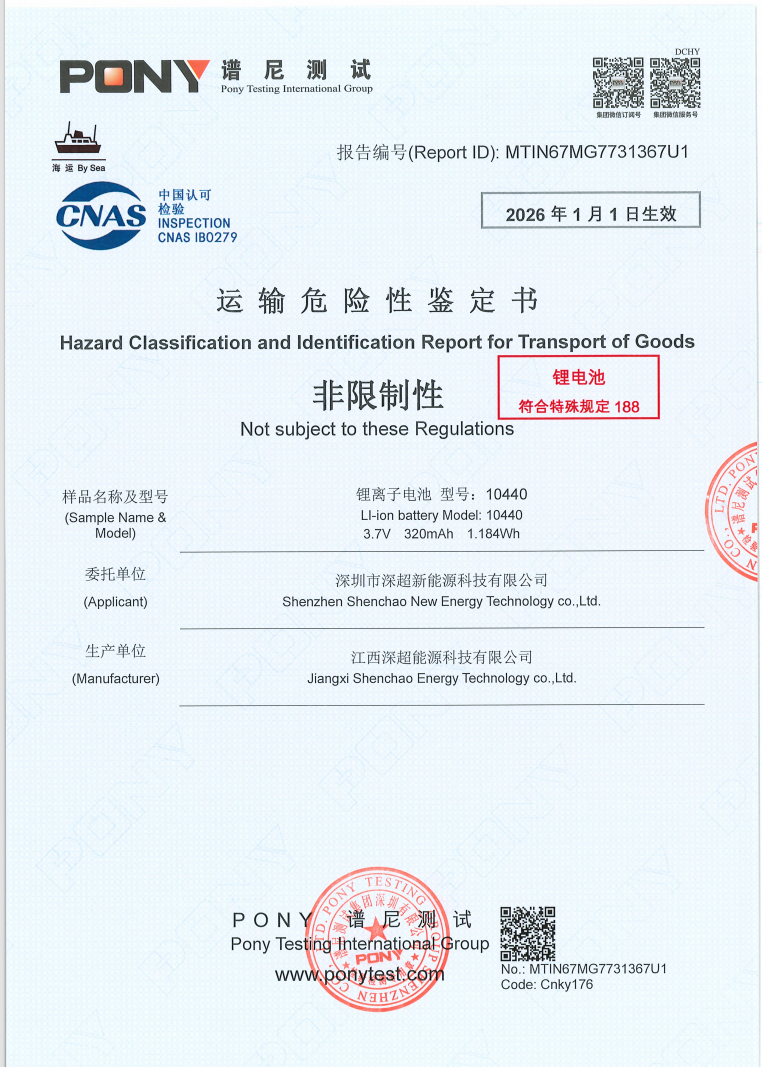
PONY transport identification report MTIN67MG7731367U1, issued 2025-12-01, valid to 2026-12-31, covering lithium-ion cell model 10440 (3.7V, 320mAh, 1.184Wh). It is a transport document under IMDG Special Provision 188, not a product certification.
Use Cases: How the Pairing Plays Out in Real Assortments
Chain repair workshops restocking a full workstation
A multi-branch chain buying for standardised benches needs both items in the same replenishment cycle, because a bench without a tweezer stops screen and connector work just as surely as a bench without a screwdriver stops teardown. Ordering both from one manufacturer keeps the commercial terms identical — same MOQ of 50 units, same 10-day lead time, same FOB/CIF structure — and removes the multi-supplier reconciliation cost that erodes margin on small tool lines.
Wholesalers building a regional SKU set
A distributor serving South America or Africa is not buying tools for one bench; it is buying a catalogue. That means stocking the ST-30 alongside the K-series rather than choosing between them, then using OEM customization on voltage and logo to build a house-brand line. The 10,000-unit monthly capacity supports repeat wholesale cycles that a single-bench buyer would never need.
Factory-line mass disassembly
A South Africa-based B-end wholesale merchant ordered 50 units of the K01 for screw removal and reported three years of stable operation, citing strong power as the standout attribute. That is the canonical electric screwdriver use case: continuous, repetitive screw driving where manual effort becomes the bottleneck.
New shop opening with a starter kit
A newly opened repair shop buying a first assortment typically needs the complete working set rather than upgrades to a single tool. Here the specification discipline matters most, because a starter order placed on unit price alone tends to arrive with the wrong tweezer length or a screwdriver whose torque behaviour was never specified.
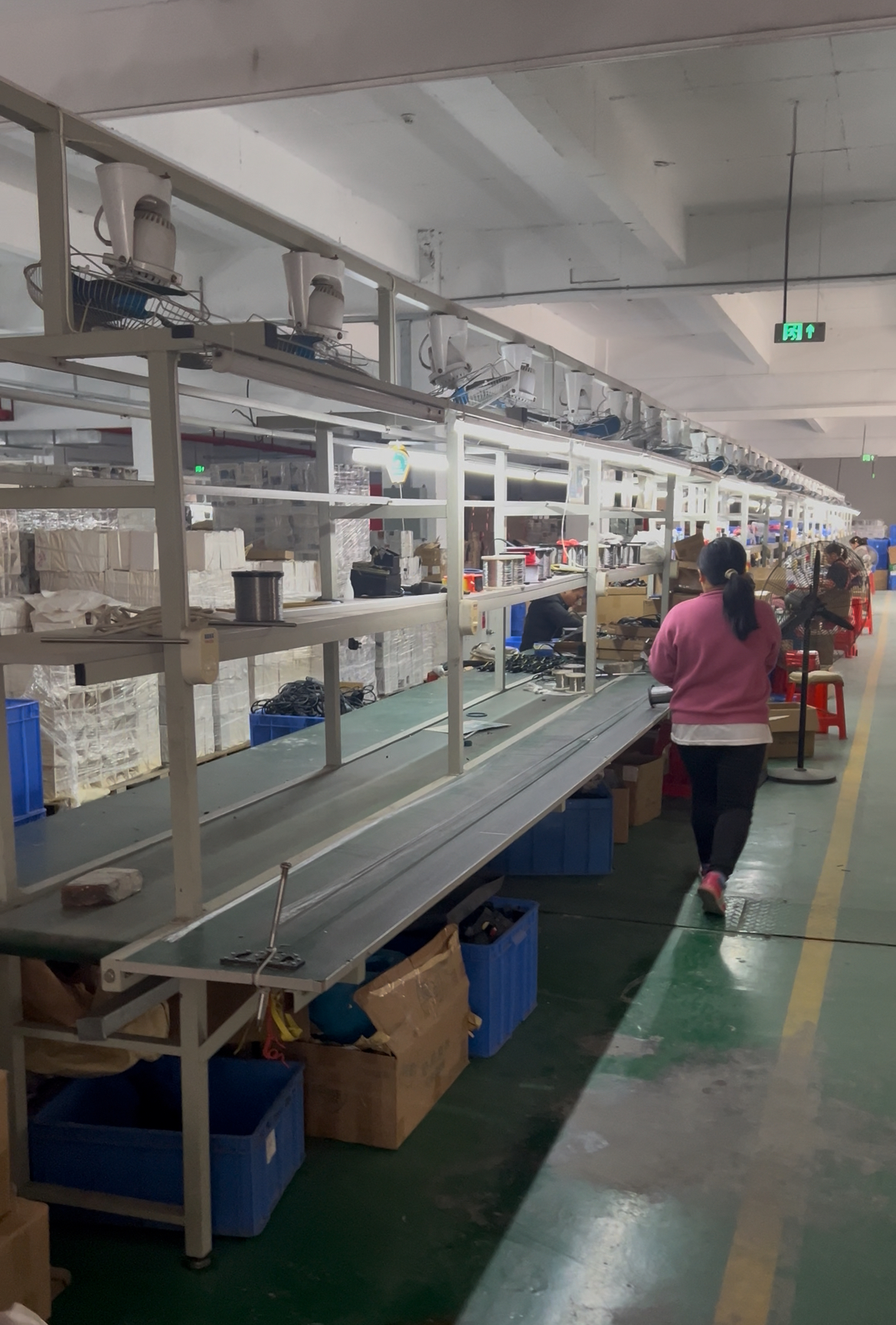
Production equipment supporting tool manufacturing. Acceptance is tied to the pre-shipment test and 100% product testing rather than to visual appearance at the factory.
Comparison Table: ST-30 Tweezer vs Mobile Phone Repair Electric Screwdriver
| Comparison dimension | ST-30 Tweezer | Mobile phone repair electric screwdriver (K-series) |
|---|---|---|
| Primary workflow role | Handling, positioning and placing non-threaded small parts | Driving and removing threaded fasteners |
| Body material | Stainless steel | Aluminum alloy |
| Key physical specification | 120 mm overall length | Power range: K01 1.5W–15W; K01 Pro 2W–15W; K02 and K04 2W–20W; K05 and K07 2W–30W |
| Torque specification | Not applicable | 1–8 N·m (K01), with high-hardness strong-magnetic bits |
| Anti-static properties | Yes | Not stated in the available product data |
| Hardness positioning | High hardness | High-hardness bits |
| OEM customization | Not stated in the available data | Voltage and logo customization available |
| Lithium battery transport documentation | Not applicable | Required when supplied with cells; PONY report MTIN67MG7731367U1 under IMDG Special Provision 188 and UN 38.3 |
| Dominant purchase risk | Specification drift: length, material, anti-static claim | Supplier-side: unstable torque and magnetism, compliance gaps, missing after-sales route |
| Acceptance criteria | Pre-shipment test against declared specification | Pre-shipment test, 100% product testing |
| MOQ | 50 units (manufacturer-level term applying to both product types) | |
| Lead time and capacity | 10 days typical production lead time; 10,000 units monthly capacity | |
| Delivery and payment terms | FOB / CIF; 100% cash payment | |
| After-sales | Remote support | |
Risk Signals to Screen Before Ordering
Three risk conditions recur in this category and are worth writing into the purchase file explicitly.
Compliance failure at the destination market. Products may fail local market compliance standards. The mitigation is to buy from a supplier holding valid third-party documentation and to confirm that the document actually covers the model being shipped — the MTIN67MG7731367U1 report covers the 10440 cell, for instance, and its validity runs to 2026-12-31.
Performance interruption during repair work. Unstable torque and magnetic performance interrupt repair work directly. Weak magnetic attraction during disassembly typically traces to long-term bit wear or improper power-supply parameter setting; the standard remedy is to replace the spare bit, re-check the power-supply parameters, and escalate to the supplier’s remote-support service if the problem persists.
Absent after-sales structure. A supplier with no formal after-sales support leaves the buyer carrying every defect. Confirm remote-support availability, the response route and the responsible contact before the order, not after.
The corresponding mitigation set is straightforward: select suppliers with valid third-party certification, a 100% product testing service, stable OEM customization capacity, and a clear remote-support policy.
FAQ
1. Does a cell phone repair tool order need lithium battery transport documentation, and what does it cover?
It depends on whether the item contains a cell. An ST-30 tweezer has no lithium cell, so battery transport documentation does not apply. An electric screwdriver kit supplied with a rechargeable cell does need it for maritime shipment. The available document is a PONY Hazard Classification and Identification Report for Transport of Goods, certificate number MTIN67MG7731367U1, covering lithium-ion cell model 10440 at 3.7V, 320mAh, 1.184Wh, packed 400 pcs per carton. It is issued under the IMO International Maritime Dangerous Goods Code 2024 Edition (Amendment 42-24) Special Provision 188 and the UN Manual of Tests and Criteria Part III subsection 38.3, dated 2025-12-01 and valid to 2026-12-31. It is a third-party transport identification report — not a product certification and not a system certification.
2. Can a manufacturer supply OEM private label kits with voltage and logo customization?
Yes. The manufacturer provides OEM production services with customization options for voltage and logo, which is what allows a wholesaler to build a house-brand tool line rather than resell a catalogue item unchanged. The relevant terms are a minimum order quantity of 50 units, a monthly production capacity of 10,000 units, and a typical production lead time of 10 days. OEM applies across the tool range, so a private label assortment can combine tweezers such as the ST-30 with electric screwdrivers in the same branded programme.
3. What order size, payment terms and price reference should a first B2B order expect?
The stated minimum order quantity is 50 units, delivery terms are FOB / CIF, and payment terms are 100% cash payment. Quotations are issued per order rather than published, so the order value depends on the model mix and customization level. For budget framing only, US customs records for mobile opener tools under HS 8205 show an average import price of roughly USD 1.03 per unit; that is a historical trade reference for the low-value end of the category, not a price for the ST-30, the K-series, or any configured kit.
4. How should a buyer verify ST-30 tweezer specs and electric screwdriver performance before shipment?
The stated acceptance criterion is a pre-shipment test, supported by 100% product testing. For the ST-30, verification means confirming the 120 mm overall length, the stainless steel material, the anti-static properties and the high-hardness positioning against the written specification and the physical sample, and confirming that the model is recorded as ST-30 rather than a neighbouring 120 mm model such as ST-21, ST-25, ST-114 or ST-115. For the electric screwdriver, verification means confirming the power band for the chosen model, the 1–8 N·m torque specification and the high-hardness strong-magnetic bits on K01, and agreeing in advance what happens if magnetic attraction weakens in service.
5. What lead time and after-sales support apply to repeat orders?
The typical production lead time is 10 days, with monthly production capacity of 10,000 units, which supports repeat wholesale cycles rather than one-off purchases. After-sales support is provided via remote support. A South Africa-based B-end wholesale merchant that ordered 50 units of the K01 for screw removal reported three years of stable operation with strong power, which is the kind of reference point buyers should ask for when assessing whether a supplier can carry a multi-year assortment.
Conclusion: Buy Both, Qualify Them Differently
The ST-30 tweezer and a mobile phone repair electric screwdriver are not substitutes, and treating them as alternatives produces a worse kit either way. The ST-30 earns its place through a 120 mm stainless steel body with anti-static properties and high hardness, and it is validated by four specification checks. The electric screwdriver earns its place through powered torque and magnetic bit retention, and it is validated by supplier qualification: a correctly read compliance file, a documented pre-shipment test, and a confirmed after-sales route.
For B2B buyers, the practical rule is simple. Screen tweezers on the specification sheet. Screen electric screwdrivers on the supplier. Then place both on one purchase order under the same commercial terms — 50-unit MOQ, FOB/CIF, 10-day lead time — so that the only variable left to manage is demand.
Building a cell phone repair tool assortment?
Request the current KOOCU tweezer and electric screwdriver catalogue, or send your model mix and target market for a quotation. OEM voltage and logo customization is available from 50 units.
Guangzhou Weiqianji Technology Co., Ltd (KOOCU) · Guangzhou, China
Email: zjzason668@gmail.com · Tel / WhatsApp: +86 181 3852 7081 · www.koocu-tools.com
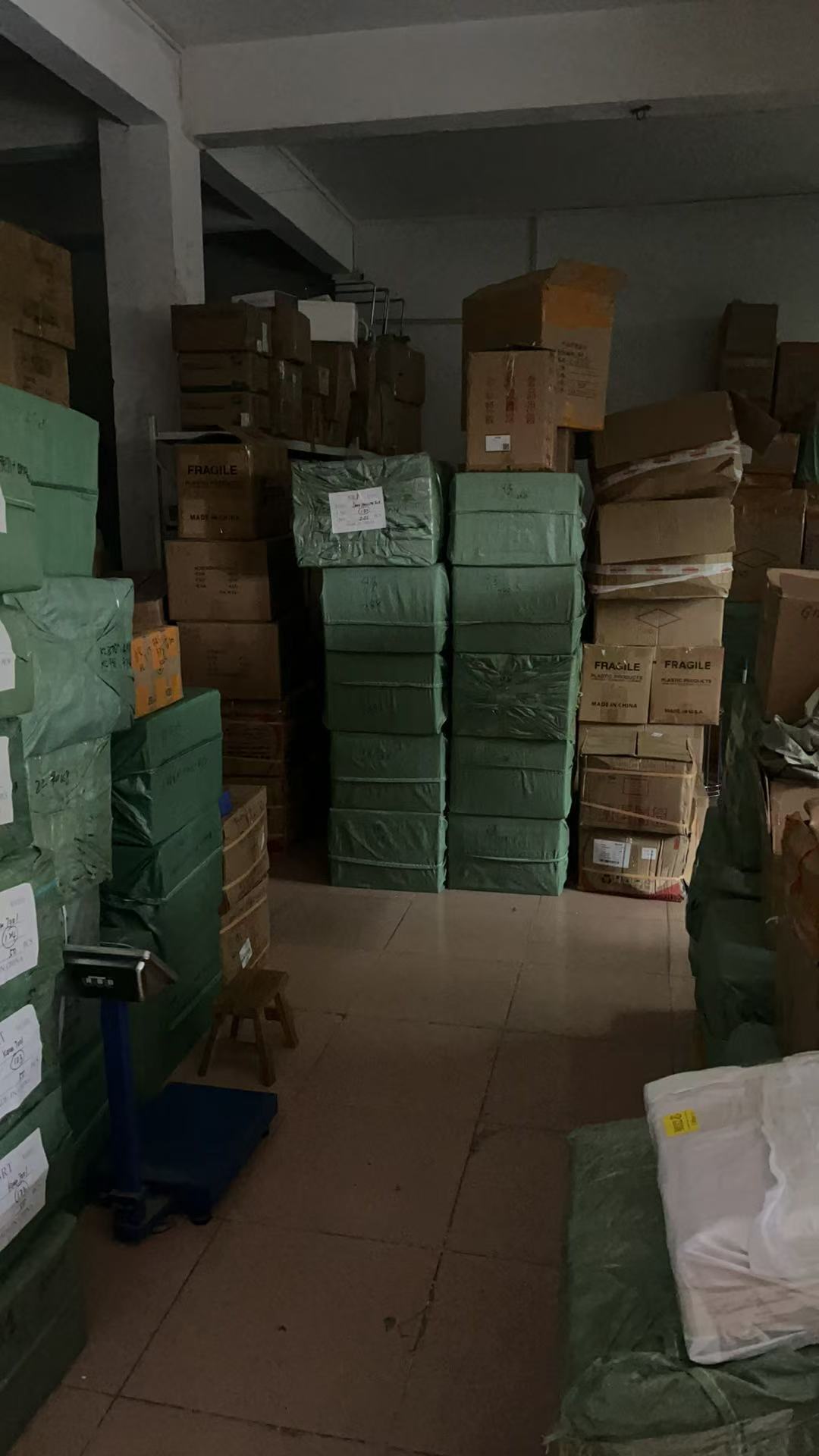
Stock and dispatch supporting repeat orders. Monthly capacity of 10,000 units and a 10-day typical lead time underpin wholesale replenishment cycles.
Have Questions or Need More Details?
Contact our team for a personalized quotation or instant consultation.
Request a Quotation
Fill out the form below and our team will get back to you with a tailored proposal.
WhatsApp Direct Chat
Prefer to chat in real-time? Message us on WhatsApp for instant assistance & quick answers.
- Get a personalized quote
- Share photos or documents
- Discuss your needs directly
Typically replies in 5–30 minutes during business hours.