
Cell Phone Repair Tools: Partnership, FAQ and After-Sales for Tweezers and Electric Screwdrivers
Cell phone repair tools are bought in cycles, not one-off transactions. A repair business that opens handsets every day wears through tweezer tips and screwdriver bits, and a distributor assembling smartphone repair tool kits re-orders the same models quarter after quarter. That is why B2B buyers of tweezers and electric screwdrivers are not really selecting a single product — they are selecting a supply relationship that has to hold its specifications, its material quality and its after-sales behaviour across every repeat order.
This guide is written for importers, distributors, repair-chain buyers and private-label kit builders working through the Awareness and Research stage of sourcing cell phone repair tools. It explains where repeat orders usually break down, what current market context means for tool demand, how a practical partnership framework looks for the FS-11, ST-25, ST-30 and ST-114 tweezers and the K01, K05 and K07 electric screwdrivers, which acceptance criteria belong in a purchase order, and the questions buyers ask most often before they commit to a long-term supply agreement.
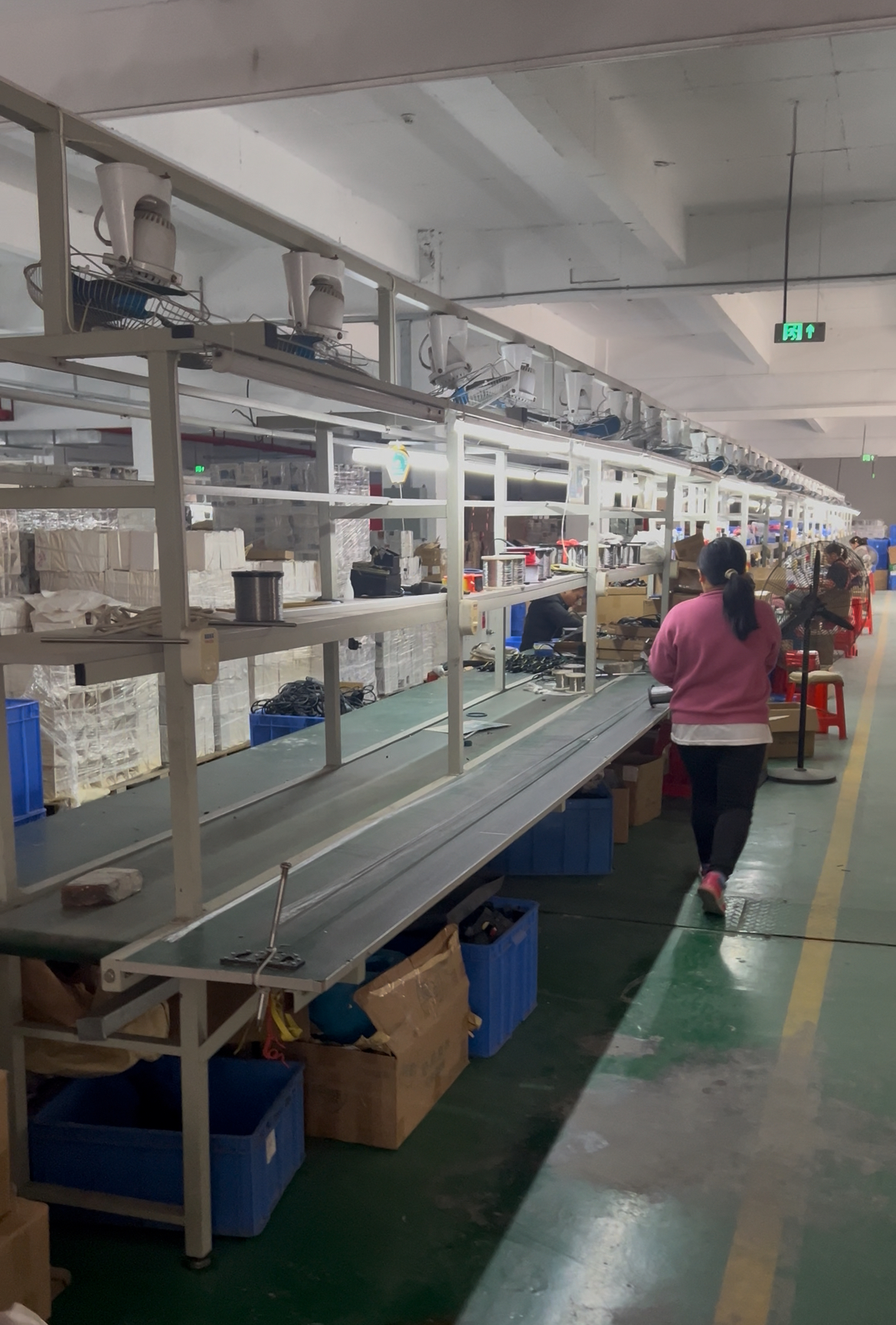
Tool production and assembly equipment behind a repeatable supply relationship for cell phone repair tools.
The Partnership Problem: Where Repeat Tool Orders Usually Fail
Most sourcing failures in this category do not appear in the first carton. They appear in the second or third shipment, when the model on the purchase order no longer matches the model in the box, when the certification file that closed the first deal cannot be produced again, or when nobody answers once a defect shows up. For buyers of mobile phone disassembly tools, the cost of that failure is not only the value of the goods — it is the disruption to kit assembly, to repair schedules and to the buyer's own credibility with downstream accounts.
Three failure patterns account for most of the damage in overseas B2B purchases of phone repair electric screwdrivers and precision tweezers:
- Compliance gaps. Products may fail local market compliance standards when the supplier cannot produce valid third-party documentation at the time of the order.
- Performance drift. Unstable torque and magnetic performance interrupt repair work, which surfaces as stripped screws, dropped components or inconsistent disassembly speed on a repair line.
- Missing after-sales ownership. When a product defect appears, there is no formal after-sales support path, so the buyer absorbs the cost and the repair shop absorbs the downtime.
The mitigation set is narrow and well defined: select suppliers with valid third-party certification, a 100% product testing routine before shipment, stable OEM customization capacity, and a clear after-sales remote-support policy. Everything that follows in this article is an expansion of those four conditions, applied specifically to tweezers and electric screwdrivers.
Industry Background: Why Buyers Now Ask for Evidence, Not Just Samples
The demand context behind cell phone repair tools has shifted in ways that affect how buyers should structure supplier relationships.
- The global smartphone repair market is valued at approximately USD 22.66 billion in 2026, according to Business Research Insights (published January 2026).
- The global manual screwdriver market was valued at USD 365.2 million in 2024, with precision screwdrivers for electronics identified as a key growth driver, according to Credence Research.
- Mobile opener tools classified under HS code 8205 show an average US import price of approximately USD 1.03 per unit, based on Zauba customs data.
- The 'Right to Repair' movement is identified as a major market driver in 2026, influencing OEMs to release repair manuals and tools to third-party providers, according to ThinkComputers.org.
Two cautions apply when these figures are used in procurement planning. First, published market sizes for smartphone repair vary significantly depending on definition — values ranging from roughly USD 20 billion to USD 215 billion appear across sources, because some studies count repair services only while others include full hardware replacement. Buyers should treat headline market values as directional and use them for category justification, not for volume forecasting. Second, the USD 1.03 figure above refers to mobile opener tools under HS 8205, not to precision tweezers or electric screwdrivers, so it should be read as an order-of-magnitude reference for landed-cost modelling rather than a price benchmark for this product group.
What the data does support is a structural conclusion: repair volume is durable and increasingly served by independent and third-party workshops, and every one of those workshops consumes precision hand tools as repeat items. A distributor who sources mobile phone repair tools on a transactional basis therefore carries more risk than one who locks specifications, inspection and after-sales into a standing agreement.
The Solution: A Partnership Framework for Tweezers and Electric Screwdrivers
Guangzhou Weiqianji Technology Co., Ltd., which trades under the brand KOOCU and publishes its catalogue at www.koocu-tools.com, is a Guangzhou-based high-tech enterprise group focused on the research and development of consumer electronics products, specialising in cell phone repair tools and related products. Its main products include cell phone repair tools such as opening tools, disassembly tools, precision screwdrivers and screen repair tools. The company ships 100% of its products to international markets, with major markets including Africa, South America, Southeast Asia, India, Bangladesh and Pakistan, and it reports an R&D team of more than 10 engineers supporting product development from a manufacturing facility covering 1,000 m².
That operating profile matters to partnership discussions because it defines what a buyer can actually hold the supplier to: an export-only business model, an engineering function that can respond to specification questions, and a defined product range rather than an open-ended trading list.
Tweezer models and their stated specifications
KOOCU tweezers are described as tweezers for mobile phone repair, and the models most often requested in B2B enquiries are the following four:
- FS-11 — a 120 mm tweezer for mobile phone repair, made of stainless steel, with high hardness and anti-static properties.
- ST-25 — a 120 mm tweezer for mobile phone repair, made of stainless steel, described as anti-static with high hardness.
- ST-30 — a 120 mm tweezer for mobile phone repair, described as anti-static.
- ST-114 — a 120 mm tweezer for mobile phone repair, made of stainless steel, with high hardness and anti-static properties.
The range does not stop at 120 mm. KOOCU also lists 115 mm models such as the TS-11, TS-15 and ST-115, and a 130 mm stainless steel model family designated 7-SA SR and SS-SA SR. That breadth is useful commercially but it creates a specification risk: two tweezers that look alike on a bench may differ in length and material. A purchase order that says only 'anti-static tweezer' is an open invitation to substitution. Every line should carry the model designation, the length and the material.
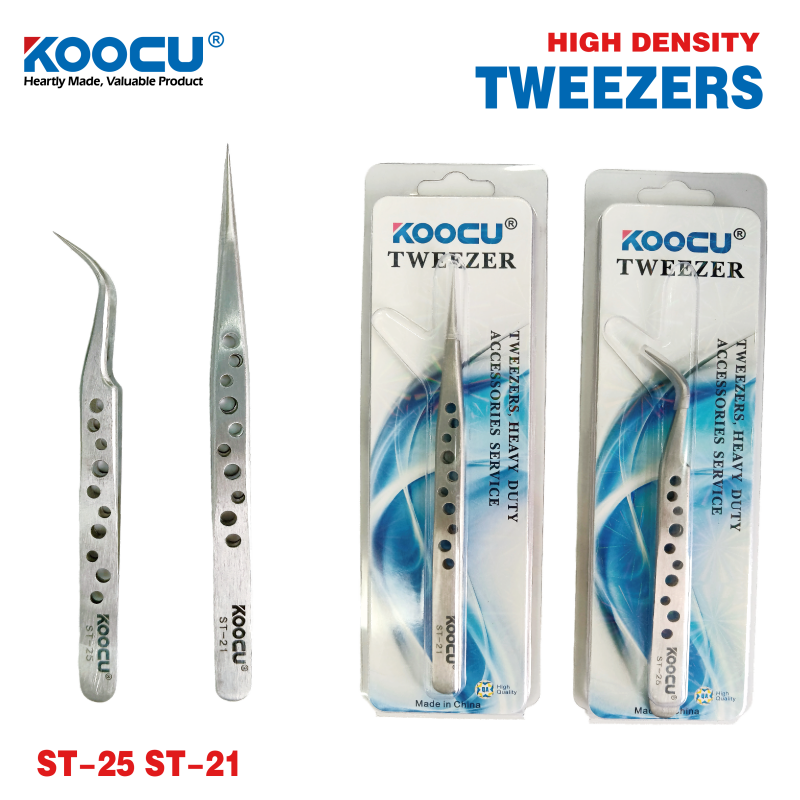
ST-25: 120 mm stainless steel tweezer for mobile phone repair, described as anti-static with high hardness.
Electric screwdriver models and their stated specifications
Electric screwdrivers in the KOOCU range are classified as special screwdrivers for mobile phone repair, built for disassembly work rather than general assembly. Three models dominate wholesale enquiries:
- K01 — an electric screwdriver for mobile phone repair with a power range of 1.5 W to 15 W, an aluminum alloy body, and stated selling points of high hardness, high toughness and strong magnetic attraction. KOOCU information describes a stable torque output of 1–8 N·m and high-hardness, strong-magnetic screwdriver bits for this model.
- K05 — an electric screwdriver for mobile phone repair with a power range of 2 W to 30 W and an aluminum alloy body.
- K07 — an electric screwdriver for mobile phone repair with a power range of 2 W to 30 W and an aluminum alloy body.
All three are positioned as part of smartphone repair tool kits and as precision screwdrivers for electronics repair, which is why distributors usually buy them alongside opening tools, pry tools and spudgers rather than as standalone units.
The three pillars of a workable partnership
Consistent specifications. The commercial value of a tweezer or an electric screwdriver is created by repeatability, not by the first unit. A distributor who supplies a phone repair toolkit to twenty workshops needs every re-order to behave the same way, or the workshops will attribute the difference to the distributor rather than to the tool. Consistency is enforced on paper: model, length, material, anti-static property, power range, torque window and bit type written into the purchase order and re-confirmed against each shipment.
Material quality. Stainless steel tweezers and aluminum alloy electric screwdrivers are the stated material basis of this range. Material quality is what converts a low unit price into a low cost per repair: a tweezer that holds its tip alignment and an electric screwdriver that holds its magnetic attraction reduce component damage and rework. Buyers should treat material declarations as acceptance criteria, not as marketing copy.
After-sales support. For this product group, after-sales is mostly diagnostic. When magnetic attraction of the screwdriver bit weakens, the documented causes are long-term wear of the bit and improper power-supply parameter settings. The corresponding support path is to replace the spare screwdriver bit, check the power-supply parameters, and contact the supplier for remote-support service if the problem persists. A supplier who can name that sequence before the sale is a different counterparty from one who cannot.
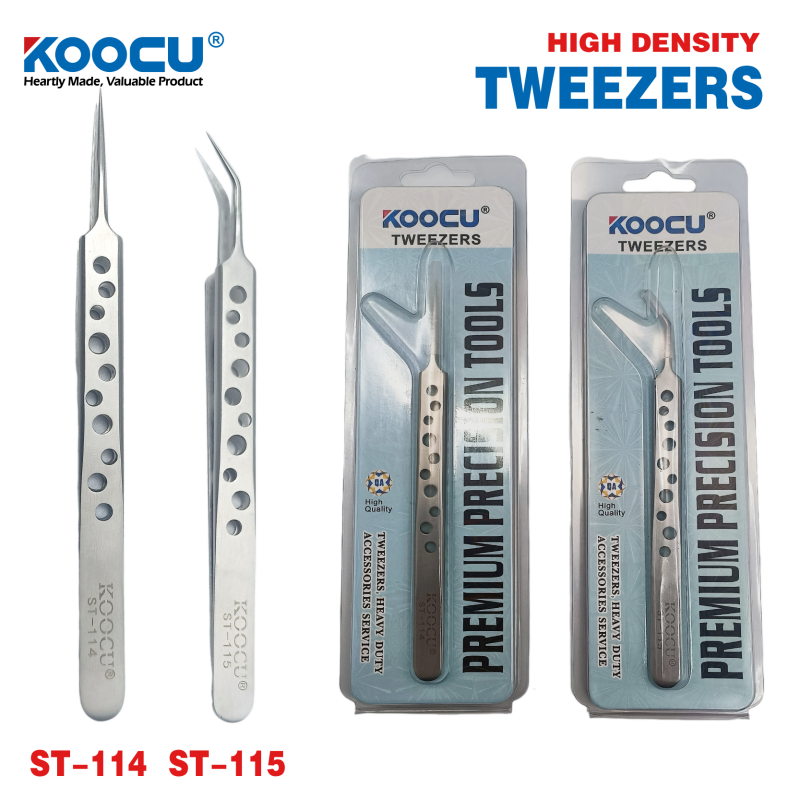
ST-114: 120 mm stainless steel tweezer for mobile phone repair, with anti-static and high hardness properties.
Step-by-Step Breakdown: Setting Up a Repeatable Supply Agreement
Step 1 — Lock the specification sheet per model
Start with a specification sheet, not a price list. For tweezers, record the model designation, the overall length (120 mm for FS-11, ST-25, ST-30 and ST-114; 115 mm for TS-11, TS-15 and ST-115), the material (stainless steel) and the anti-static property. For electric screwdrivers, record the model, the power range (1.5 W–15 W for K01; 2 W–30 W for K05 and K07), the aluminum alloy body and the bit specification. This sheet becomes the reference document for every later order and every dispute.
Step 2 — Verify compliance evidence before the first order
Compliance is the first gate, because a tool that cannot enter the destination market has no resale value. KOOCU states that the K01 electric screwdriver is covered by PONY CNAS Certificate MTIN67MG7731367U1, tested against the EN 10440 standard. For products used in power-supply working conditions, an explosion-proof requirement applies to that working condition and should be written into the technical agreement rather than assumed from a product photo. Ask for the certificate reference, the standard it is tested against and the model coverage, and keep the file attached to the purchase order.
Step 3 — Validate with samples from the exact models you will sell
Samples only prove something if they are the models you intend to distribute. Order FS-11, ST-25, ST-30 or ST-114 as specified, and the K01, K05 or K07 electric screwdriver you plan to stock. Retain the accepted unit as a reference sample and record what you accepted: length, material finish, tip alignment, anti-static behaviour, magnetic attraction and torque stability in the stated 1–8 N·m window for K01.
Step 4 — Agree the OEM terms in writing
KOOCU supports OEM customization on the K01 electric screwdriver for voltage and logo, with a stated MOQ of 50 units and a lead time of 10 days. If private labeling matters to your business, those three numbers — customization scope, MOQ and lead time — belong in the agreement before artwork is commissioned, because they determine whether a private-label program is viable at your order volume.
Step 5 — Write acceptance criteria into the purchase order
Acceptance criteria convert a supplier promise into a testable condition. For tweezers: stated length, stainless steel material, anti-static property, tip alignment and finish. For electric screwdrivers: stated power range, aluminum alloy body, magnetic attraction of the bit, torque stability and the matched screwdriver bit supplied with the unit. Add labeling and packaging requirements, and require the compliance file to accompany the shipment.
Step 6 — Fix the inspection regime
KOOCU applies 100% finished-product testing before shipment. For the buyer, the practical question is what the inspection record covers and whether it can be shared with the shipment. A stated 100% pre-shipment inspection routine is only useful if it is repeatable across orders, so confirm it as a standing term rather than a one-time favour.
Step 7 — Define the after-sales path before you need it
Agree who is contacted, through which channel, and what the first diagnostic steps are. For the electric screwdriver, the documented sequence for weak bit magnetism is: replace the spare screwdriver bit, check power-supply parameters, and escalate for remote-support service if the issue persists. Also confirm the handling rule for long continuous operation — the tools are specified for power-supply working conditions with an explosion-proof requirement, and continuous overload should be avoided.
Step 8 — Set a review cadence
Repeat orders drift quietly. Schedule a periodic comparison of delivered goods against the reference sample and against the specification sheet, review defect reports, and re-confirm specification changes in writing. This single habit separates a supply relationship from a series of unrelated purchases.
Use Cases: Where These Tools and Terms Fit
Repair chains and multi-store operators
A chain running several workstations needs identical tweezers at every bench. FS-11, ST-25, ST-30 and ST-114 at 120 mm give a consistent handling length across stores, and the anti-static property matters wherever boards and small components are handled. For a chain, the partnership question is not which tweezer is cheapest but whether the tenth re-order behaves like the first.
Wholesale distributors and importers
Distributors serving Africa, South America, Southeast Asia, India, Bangladesh and Pakistan typically combine tweezers, precision screwdrivers and opening tools into a sellable assortment. Here the acceptance criteria and the specification sheet travel downstream: the distributor's own customers will judge the distributor by tool consistency. A supplier with 100% export focus and a defined model range reduces the assortment risk that comes from mixing inconsistent sources inside one catalogue.
Factory-line mass disassembly
In a factory-line disassembly setting — indoor normal temperature, screw removal by rotate-and-twist operation with a matched screwdriver bit — the electric screwdriver replaces sustained manual effort. KOOCU describes the K01 as relying on electric-driven torque output to improve disassembly efficiency in cell phone repair scenarios, with an aluminum alloy body and high-hardness magnetic bits reducing manual physical consumption compared with a manual screwdriver. The same working condition carries an explosion-proof requirement under power supply, which should be confirmed for the specific line rather than assumed.
Private-label kit builders
Buyers assembling a professional cell phone repair kit under their own brand need OEM flexibility plus a defensible MOQ. With voltage and logo customization available on K01 at a stated MOQ of 50 units and a 10-day lead time, a private-label program can be tested at modest volume before it is scaled. Tweezers in the same kit should be specified by model and length so the kit's contents remain stable between production runs.
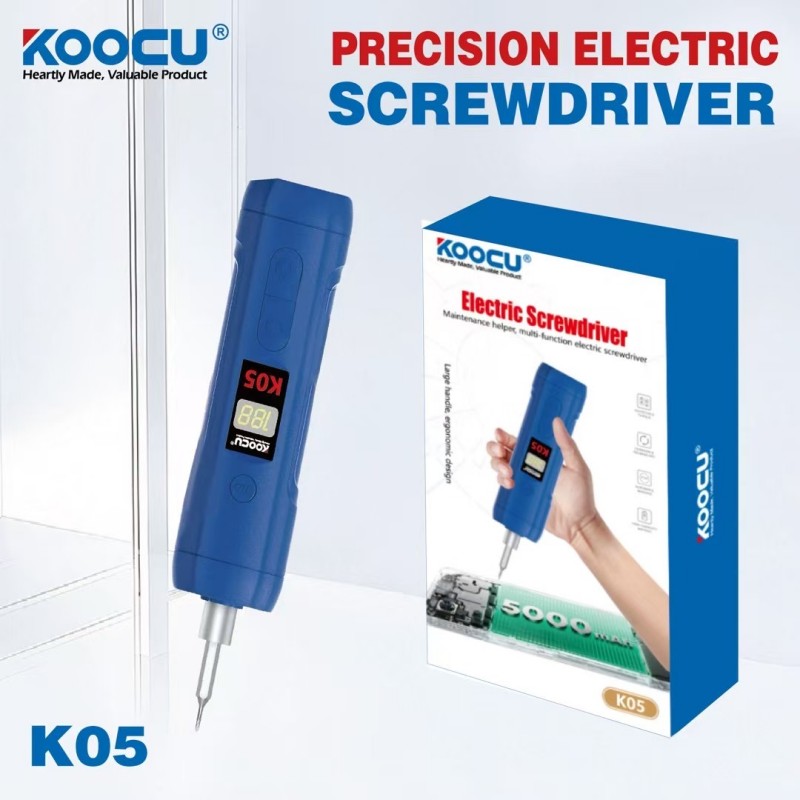
K05: aluminum alloy electric screwdriver for mobile phone repair, stated power range 2 W–30 W.
Comparison Table: Tweezers, Electric Screwdrivers and Partnership Terms
Table 1 — Tweezer models and stated specifications
| Model | Length | Material | Anti-static | Stated selling points |
|---|---|---|---|---|
| FS-11 | 120 mm | Stainless steel | Yes | High hardness, anti-static |
| ST-25 | 120 mm | Stainless steel | Yes | High hardness, anti-static |
| ST-30 | 120 mm | Not stated in the supplied specification | Yes | Anti-static |
| ST-114 | 120 mm | Stainless steel | Yes | High hardness, anti-static |
Table 2 — Electric screwdriver models and stated specifications
| Model | Power range | Body material | Stated selling points |
|---|---|---|---|
| K01 | 1.5 W–15 W | Aluminum alloy | High hardness, high toughness, strong magnetic attraction |
| K05 | 2 W–30 W | Aluminum alloy | High hardness, high toughness, strong magnetic attraction |
| K07 | 2 W–30 W | Aluminum alloy | High hardness, high toughness, strong magnetic attraction |
Table 3 — Partnership and acceptance reference points
| Item | Stated term | Where it is verified |
|---|---|---|
| Minimum order quantity (K01) | 50 units | Supplier OEM terms |
| Lead time (K01 with OEM) | 10 days | Supplier OEM terms |
| OEM customization (K01) | Voltage and logo | Supplier OEM terms |
| Pre-shipment inspection | 100% finished-product testing | Supplier quality statement |
| Certificate reference | PONY CNAS Certificate MTIN67MG7731367U1 (EN 10440) | Certificate file held with the order |
| After-sales path | Spare bit replacement, power-supply parameter check, remote-support escalation | Written into the supply agreement |
FAQ: Partnership, Purchasing Terms and After-Sales
1. What compliance documents should a B2B buyer request from a cell phone repair tools supplier?
Request the certificate reference, the standard it was tested against, and confirmation of which models it covers. KOOCU states that the K01 electric screwdriver is covered by PONY CNAS Certificate MTIN67MG7731367U1, tested to the EN 10440 standard. Where the tool is used in power-supply working conditions, an explosion-proof requirement applies to that working condition and should be specified in the technical agreement. Pair the certificate with the inspection routine: KOOCU implements 100% finished-product testing before shipment, and a certificate without a matching inspection record is incomplete evidence of compliance readiness.
2. Can the supplier customize electric screwdrivers for our brand and voltage?
Yes, for the K01 electric screwdriver. KOOCU supports OEM customization for voltage and logo, with a minimum order quantity of 50 units and a lead time of 10 days. The company reports an R&D team of more than 10 engineers supporting product development from a 1,000 m² manufacturing facility, and it describes stable OEM customization capacity as part of the supplier profile it presents to overseas buyers. Tweezers are a separate case: customization there is a specification question — length, material, anti-static property and tip form — and must be confirmed model by model rather than assumed from the screwdriver terms.
3. How do purchasing terms and quotations work for overseas B2B orders?
KOOCU operates as an export-focused B2B supplier: 100% of its products are shipped to international markets, with major markets including Africa, South America, Southeast Asia, India, Bangladesh and Pakistan. Purchases are handled through direct business communication by email or WhatsApp rather than published retail pricing, and quotations are built against confirmed specifications — model, length, material, power range, OEM logo or voltage requirements, and packaging. For reference during budget modelling, US customs data (Zauba) shows an average import price of approximately USD 1.03 per unit for mobile opener tools under HS code 8205; that figure covers a different product class and should not be applied directly to precision tweezers or electric screwdrivers.
4. How should a buyer validate samples before committing to repeat orders?
Order the exact models you intend to sell, not an equivalent. For tweezers, check the stated 120 mm length, the stainless steel material, the anti-static property and the tip alignment on FS-11, ST-25, ST-30 or ST-114. For electric screwdrivers, check the aluminum alloy body, the stated power range of the specific model, the magnetic attraction of the bit and torque stability within the 1–8 N·m window described for K01. Retain the accepted unit as a reference sample, then compare each incoming shipment against it — a practice that only works when the supplier applies 100% finished-product testing before shipment, as KOOCU states it does.
5. What lead time and after-sales support come with a repeat order?
For K01 orders with OEM customization, KOOCU states a lead time of 10 days at a minimum order quantity of 50 units. After-sales support is handled remotely: if the magnetic attraction of the screwdriver bit weakens, the documented causes are long-term wear of the bit and improper power-supply parameter settings, and the response sequence is to replace the spare screwdriver bit, check the power-supply parameters, and contact the supplier for remote-support service if the problem persists. Continuous overload should be avoided. Buyers who want to test this support path before scaling can request a sample and a quotation against their own specification sheet by contacting Jason at zjzason668@gmail.com or by phone and WhatsApp at +86 181 3852 7081.
Next Step for B2B Buyers
Send your model list and target specifications — tweezer length and material, electric screwdriver power range, OEM logo or voltage requirements — and request a sample and a quotation built against those terms.
Contact: Jason | Email: zjzason668@gmail.com | Phone / WhatsApp: +86 181 3852 7081 | Website: www.koocu-tools.com
Guangzhou Weiqianji Technology Co., Ltd. (KOOCU) supplies cell phone repair tools to export markets. Contact the team for samples, specifications and quotations.
Conclusion
A long-term agreement on cell phone repair tools stands on three pillars: consistent specifications, material quality and after-sales support. Consistency is created by documentation — a specification sheet that names the model, the 120 mm length and the stainless steel material for FS-11, ST-25, ST-30 and ST-114, and the power range and aluminum alloy body for K01, K05 and K07. Material quality is enforced by writing material declarations into acceptance criteria rather than trusting a photograph. After-sales is secured by agreeing the diagnostic path before the first defect appears, from spare bit replacement and power-supply parameter checks to remote-support escalation.
Guangzhou Weiqianji Technology Co., Ltd. (KOOCU) presents those pillars in concrete terms for overseas B2B buyers: an export-only business model serving Africa, South America, Southeast Asia, India, Bangladesh and Pakistan; PONY CNAS Certificate MTIN67MG7731367U1 tested to EN 10440 for the K01 electric screwdriver; 100% finished-product testing before shipment; OEM voltage and logo customization at a stated MOQ of 50 units and a 10-day lead time; and remote after-sales support. Buyers who structure their purchase orders around those terms are not simply buying tweezers and screwdrivers — they are building a supply relationship that behaves the same way on the tenth order as it did on the first.
Have Questions or Need More Details?
Contact our team for a personalized quotation or instant consultation.
Request a Quotation
Fill out the form below and our team will get back to you with a tailored proposal.
WhatsApp Direct Chat
Prefer to chat in real-time? Message us on WhatsApp for instant assistance & quick answers.
- Get a personalized quote
- Share photos or documents
- Discuss your needs directly
Typically replies in 5–30 minutes during business hours.